What scoliosis is
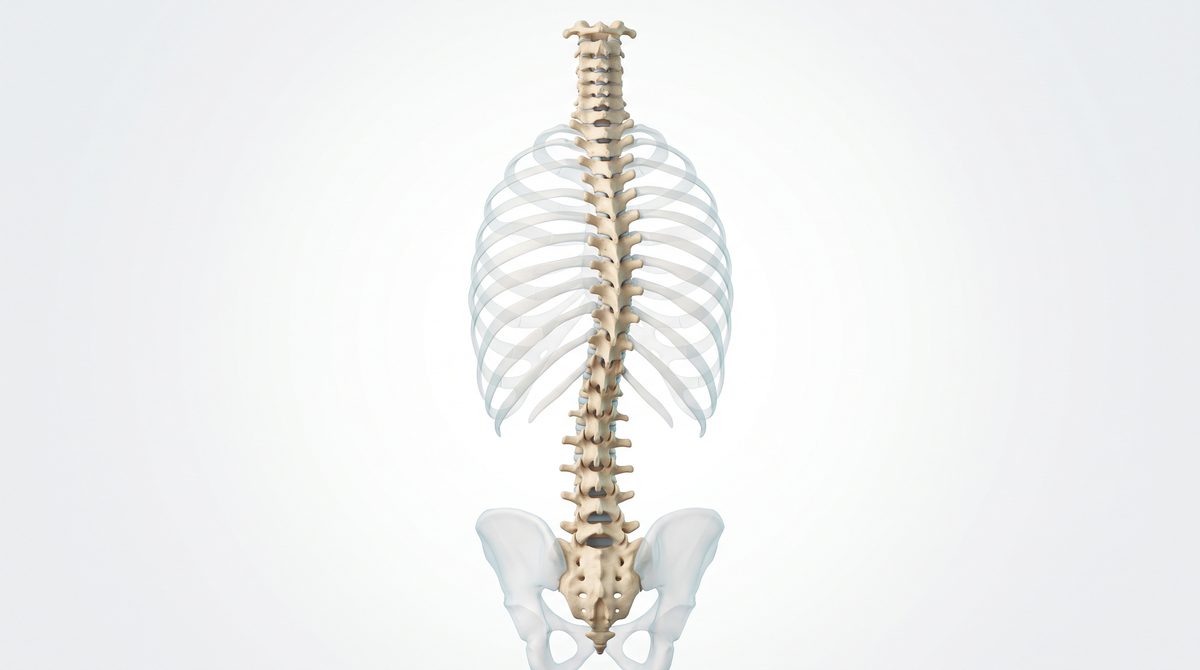
Scoliosis is a sideways curve of the spine. Doctors measure it on an X-ray using the Cobb angle, which is the angle between the most tilted bones at the top and bottom of the curve. A curve of more than 10 degrees counts as scoliosis. The spine usually twists as it bends, which is why one side of the ribs or the low back can look fuller than the other.
Adult scoliosis is more common than most people think. In one study of healthy volunteers over age 60 with no known history of scoliosis, 68 percent had a curve larger than 10 degrees on X-ray.
The two main types in adults
Scoliosis that started in childhood
Some adults were diagnosed as children or teenagers, most often with idiopathic scoliosis, meaning no clear cause was found. Many of these curves stay stable for life. Larger curves, often those over about 50 degrees, may slowly get bigger over the years. People in this group may notice more back pain or a change in posture in their 40s, 50s or later.
Degenerative scoliosis
Degenerative scoliosis, also called de novo scoliosis, starts in adulthood. As the discs and small joints in the low back wear down, they may wear more on one side than the other. Over time the spine tilts and rotates. It usually shows up after age 50, most often in the lower back. It often comes with lumbar spinal stenosis, because the same wear that causes the curve also narrows the space for the nerves.
More than a sideways curve
Spine surgeons look at the spine from the side as well as from the back. From the side, a healthy spine has gentle curves that keep your head balanced over your pelvis. When the low back loses its normal inward curve, a problem sometimes called flatback, the body tips forward. People then lean forward, bend their knees or tilt the pelvis to stay upright, which is tiring and can be painful.
Research on adult deformity has shown that this front-to-back balance often has more to do with symptoms than the size of the sideways curve alone. That is why a full evaluation includes both views. You can read more on our spinal deformity page.
Common symptoms
- Low back pain, often worse in the evening or after standing
- Leg pain, numbness or heaviness with walking, from pinched nerves
- Getting tired quickly when standing or walking, and needing to lean on a counter or shopping cart
- Leaning forward or to one side
- Losing height, or noticing that pants hems or shirts no longer hang evenly
- A rib hump, uneven waistline or one shoulder higher than the other
Many adults with a curve have mild symptoms or none. The curve alone is not a reason for treatment. Symptoms and changes over time matter more.
How it is evaluated
A visit usually starts with your history and an exam that looks at posture, balance, strength and walking. The key test is a set of full-length standing X-rays, taken from the front and the side while you stand normally. Standing films show how the spine behaves under your body weight, which lying-down scans cannot.
An MRI may be added to look at the nerves if you have leg symptoms. A bone density test is often part of the workup, because many adults with scoliosis are also at risk for osteoporosis. Earlier X-rays, if you have them, help show whether the curve is changing.
Nonsurgical treatment
Most adults with scoliosis start with nonsurgical care, and many never need anything more:
- Physical therapy focused on core strength, posture and flexibility
- Regular low-impact exercise such as walking, cycling or water exercise
- Anti-inflammatory medicine for flare-ups
- Injections for leg pain from pinched nerves, or for painful joints
- Treating weak bones, which matters for long-term health and for any future surgery
Braces do not straighten adult curves. A brace may be used for comfort for short periods, but it is not a long-term fix. Our guide to nonsurgical care for back pain covers these options in more detail.
When surgery may be considered
Surgery may be discussed when pain or leg symptoms keep limiting daily life despite good nonsurgical care, when the curve or forward lean is clearly getting worse, or when nerve problems are causing weakness. The type of surgery depends on the main problem:
- Decompression alone may help if leg pain from stenosis is the main problem and the curve is small and stable.
- A short fusion may treat a painful, unstable segment within a larger curve.
- A longer fusion with correction may be needed to restore balance when the spine is tipped forward or the curve is large. This may involve reshaping bone, called osteotomy, and screws and rods across several levels.
Longer deformity operations are major surgery. They take careful planning, often include bone health treatment beforehand, and recovery commonly takes six months to a year. They also carry higher risks than smaller spine operations. For the right person, they may improve pain, posture and the ability to stand and walk. Imaging and navigation tools may help with screw placement in these cases.
Complex adult deformity correction is one of the focus areas at Central Valley Advanced Spine. Dr. Higginbotham completed his spine fellowship at UC Davis. You can read about the approach on our adult deformity correction page.
When to call us
Call if you have been told you have scoliosis and your posture is changing, if you are leaning forward more or losing height, or if leg pain and fatigue are shortening your walks. It helps to bring any old spine X-rays you can find, even from years ago, since comparing them shows whether the curve has changed.
Common questions
Can adult scoliosis be corrected?
Surgery can often reduce a curve and improve balance, but it rarely makes the spine perfectly straight. The main goals are less pain, better balance and protecting the nerves, not a perfect X-ray.
Will my curve get worse?
Some curves stay the same for decades. Others, especially larger curves and degenerative curves, may progress slowly, often by a degree or so a year. Repeat standing X-rays over time show which pattern you have.
Can exercise fix scoliosis?
Exercise does not straighten an adult curve, but it can improve strength, posture and pain. It is a key part of care whether or not surgery is ever needed.
Am I too old for scoliosis surgery?
Age alone does not rule it out. Overall health, bone strength, and how much the curve affects your life matter more. A careful evaluation is needed to weigh the benefits and risks.
Sources
- Scoliosis, MedlinePlus Medical Encyclopedia (NIH)
- Schwab F, et al. Adult scoliosis: prevalence, SF-36, and nutritional parameters in an elderly volunteer population. Spine. 2005.
- Kyphosis, MedlinePlus Medical Encyclopedia (NIH)
- Scoliosis, MedlinePlus (NIH)