What spinal deformity is
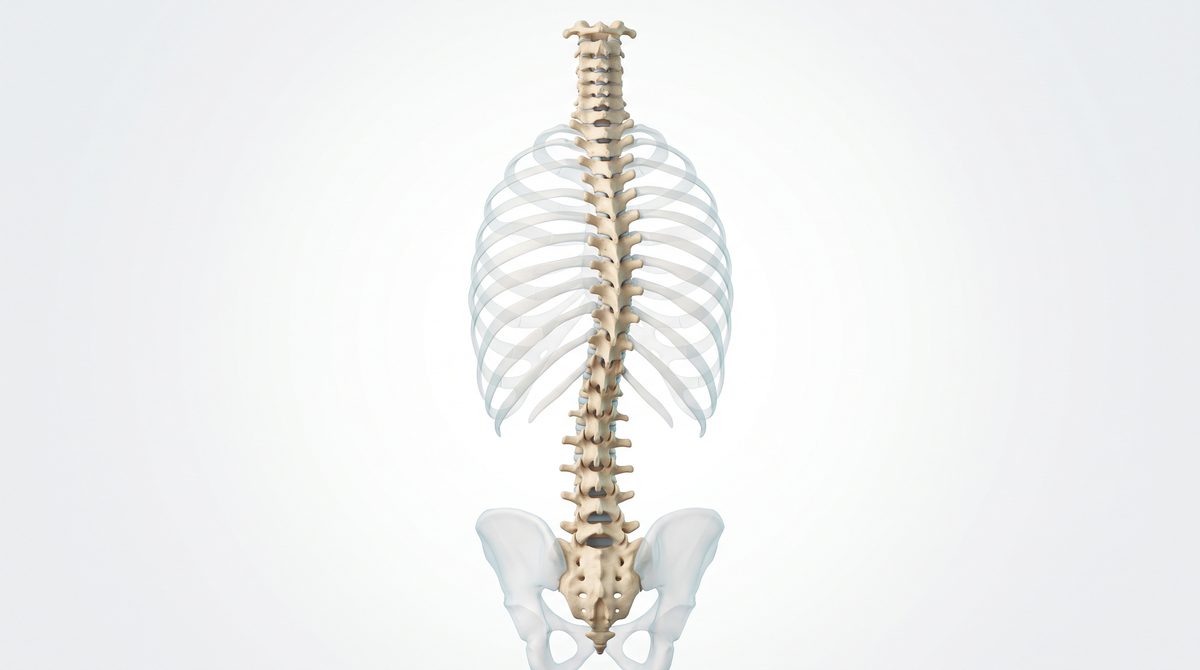
From behind, a healthy spine looks close to straight. From the side, it has three soft curves that keep your head centered over your hips. Spinal deformity is a change in that shape that is large enough to matter. A spine specialist looks at the curve in two directions, side to side and front to back, because both affect how you stand and move.
The main types seen in adults are:
- Adult idiopathic scoliosis. A side curve that started in childhood or the teen years and has continued into adulthood. Some of these curves slowly grow over the decades.
- Degenerative (de novo) scoliosis. A new side curve that forms later in life, usually in the low back, as discs and joints wear unevenly. It often comes with narrowing that pinches the nerves.
- Kyphosis. The upper back or the whole spine rounds forward. Causes include disc wear, compression fractures from osteoporosis and some inflammatory conditions.
- Flatback. The low back loses its inward curve, which pitches the body forward. It can follow long fusions done in the past or develop from disc collapse.
- Spondylolisthesis. One vertebra slips forward on the one below it, from a crack in the back of the bone (isthmic) or from joint wear (degenerative).
Symptoms
A curve can be present for years without pain. Symptoms tend to come from muscle fatigue, pinched nerves or the effort it takes to stay upright:
- Low back pain that builds through the day and is worse after standing or walking
- Leaning forward or to one side, and needing to bend the knees to stand straight
- Leg pain, numbness or weakness when nerves are pinched in the curve
- Needing a cane, walker or shopping cart to walk farther
- One shoulder or hip higher than the other, a rib hump, or clothes that fit differently
- Loss of height, or the ribs resting against the top of the pelvis in larger curves
How it is diagnosed
The workup for deformity focuses on how your spine lines up when you are standing, since that is when the curve and the imbalance show up.
Standing x-rays
Full-length films from the front and side show the size of each curve and how your head, spine and pelvis line up.
Posture exam
We watch how you stand and walk, and check nerve function, hip motion and flexibility.
MRI or CT
These scans show pinched nerves, disc health and the shape of the bone when surgery is being considered.
Bone density
A DEXA scan checks for osteoporosis, which affects both the cause of some curves and treatment choices.
Comparing new x-rays to older ones, when you have them, shows whether the curve is changing. If you have old films from childhood or from other doctors, bring them.
Treatment without surgery
Most adults with spinal deformity are treated without an operation. The goal is to manage pain, keep strength and flexibility and protect bone health. That may include:
- Physical therapy aimed at core strength, posture, hip flexibility and balance
- Regular low-impact exercise such as walking, stationary biking or water exercise
- Pain and nerve medicine for flare-ups
- Injections for pinched nerves or painful joints
- Treatment of osteoporosis, which may help prevent fractures that can worsen a curve
Braces do not correct a curve in adults. Some people find one helpful for short periods of activity, but long-term brace use can weaken the core muscles. The article adult scoliosis explained goes into these options in more depth.
When surgery may help
Surgery is usually considered when pain, nerve symptoms or loss of balance limit daily life after good nonsurgical care, or when a curve keeps growing. Some people need only a focused operation to free pinched nerves. Others need a fusion of a few levels. When balance is badly off, a larger reconstruction may be discussed. That larger operation is covered on our page about complex adult deformity correction. Screws in these operations are often placed with computer navigation.
Deformity surgery is a major decision with real risks, including infection, nerve injury, problems with the hardware or fusion, and the chance of more surgery later. Good results are possible for the right patient, but they are not guaranteed.
Dr. Higginbotham's background in deformity
Scoliosis correction and spinal deformity correction are among Dr. Higginbotham's listed areas of expertise. He completed his orthopaedic spine fellowship at UC Davis. His published research includes a study comparing front and back fusion for adults with isthmic spondylolisthesis (JAAOS, 2026) and a study of spine trauma outcomes in people with ankylosing spondylitis and DISH, two conditions that stiffen the spine (JAAOS, 2026).
Questions to ask at your visit
- What type of deformity do I have, and how large is the curve?
- Is my curve getting worse compared with older x-rays?
- Is my leg pain from the curve or from a pinched nerve?
- Should my bone density be checked or treated?
- What would make surgery worth considering in the future?
Frequently asked questions
Can scoliosis start in adulthood?
Yes. Degenerative scoliosis can form later in life as discs and joints wear unevenly. It is most common in the low back and in people over 50.
Will my curve keep getting worse?
Some curves stay stable for many years and some grow slowly. Larger curves and curves with wearing discs are more likely to progress. Repeat standing x-rays over time show the trend.
Does a curve always need surgery?
No. Most adults with scoliosis or kyphosis are treated without surgery. The decision is based on symptoms and function, not the size of the curve alone.
Can exercise fix my curve?
Exercise will not straighten a curve, but it can improve strength, posture, balance and pain. It is a key part of care whether or not surgery is ever needed.
What is the difference between scoliosis and kyphosis?
Scoliosis is a curve to the side, seen when looking at the back. Kyphosis is a forward rounding, seen when looking from the side. Many adults with deformity have some of both, which is why x-rays are taken from the front and the side.
Can I keep working and staying active with a curve?
Most people can. Staying active is encouraged. Therapy can help you adjust how you lift, sit and stand at work, and pacing longer tasks with short breaks often helps with fatigue.
Is spinal deformity linked to osteoporosis?
It can be. Compression fractures from weak bones can cause forward rounding of the spine. Weak bones also affect how well screws hold if surgery is needed.