The honest version first
Our only office is in Fresno. We do not hold clinics in Bakersfield, and surgery takes place in Fresno. The drive is about 110 miles up Highway 99, which is close to two hours each way without stops.
For a small outpatient procedure, that distance is a single long day. For deformity surgery, it is bigger. There is more planning, a hospital stay, and more follow-up visits in the first year. Bakersfield has its own spine surgeons, and some adults with a curve are well cared for there. People from Kern County who come to us often want a second opinion on a large operation before they commit to it. That is a reasonable thing to want.
What deformity correction means
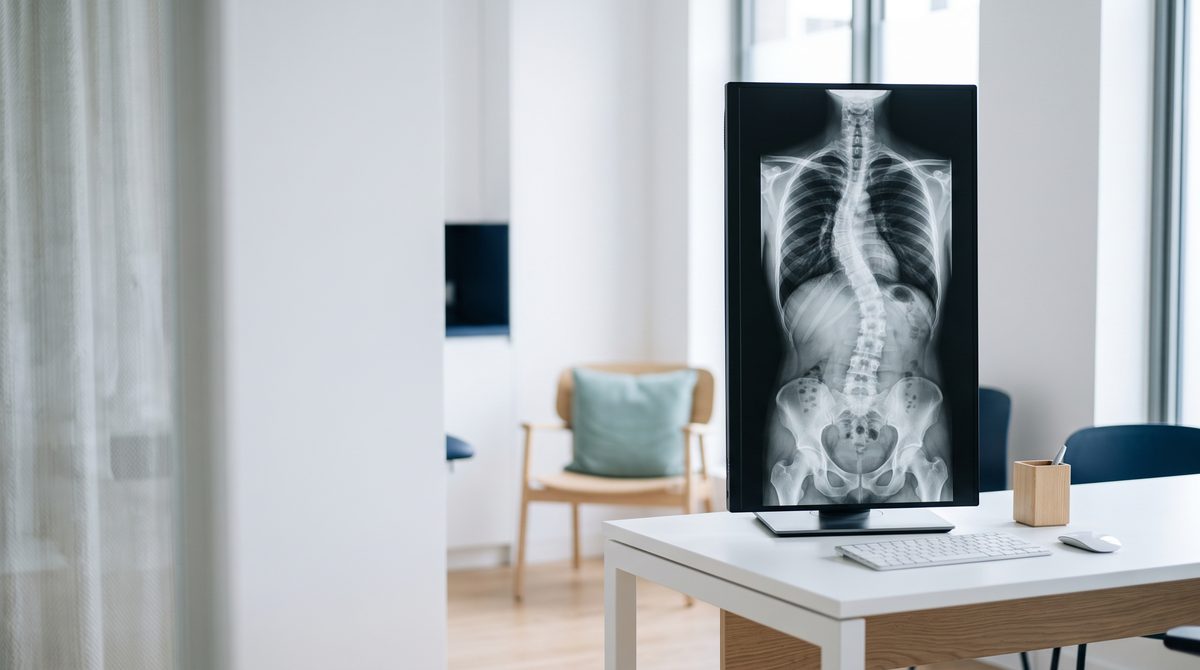
Adult spinal deformity is a spine that has lost its normal shape. It may curve to the side (scoliosis), tip forward (kyphosis or flatback), or have one bone slipped forward on another. Over years this can cause back pain, leg pain from pinched nerves and trouble standing up straight or walking for long.
Complex adult deformity correction takes pressure off the nerves and brings the spine back toward better balance. It usually means a fusion across several levels with screws and rods. Sometimes the bone is reshaped to correct the curve. Navigation is often used to guide screw placement.
Many adults with a curve never need surgery. Therapy, activity changes and pain care help a lot of people. Surgery comes up when the curve or the imbalance limits daily life and other care has not been enough.
Signs that bring Bakersfield patients in
People describe leaning forward more as the day goes on, needing a cart to walk through a store, or leg pain that makes standing at a job site or in a kitchen hard. Some have had an earlier fusion and have slowly lost their upright posture. Others were told as teenagers that they had a mild curve and now find it has changed.
These changes tend to build slowly, so people often wait years before asking about them. There is no single right time. A visit makes sense when the problem is changing how you live, not just how your x-ray looks.
Leg symptoms often come from stenosis in the lower back that travels with the curve. You can read more about the different types on our adult spinal deformity page.
Planning a deformity operation from Bakersfield
Planning takes more than one visit, and much of it can start at home.
- Imaging. We usually need standing x-rays of the whole spine, plus an MRI or CT. If any of these were done in Bakersfield, have them sent before your visit. We may still need our own standing films.
- Health check. Bone strength, nutrition, blood sugar and smoking all affect how a fusion heals. Dr. Higginbotham is first author of a national study on how spine surgeons check nutrition, function and bone health before surgery (JAAOS, 2024). Your primary care doctor in Bakersfield can often help with this part.
- Hospital stay. A stay of several days at Fresno Surgical Hospital is common. Family members from Kern County often stay in a Fresno hotel during that time instead of driving four hours a day.
- Getting home. The ride home is a long one after a large surgery. We will talk about stops, positioning and who should drive.
- Recovery. Physical therapy is usually part of recovery and can often be done in Bakersfield. Follow-up visits in Fresno are spaced out over the first year.
Our article on preparing for spine surgery has a longer checklist.
Bakersfield deformity questions
My curve is mild. Should I still make the drive?
Maybe not yet. Many mild curves are managed without surgery, often with care close to home. If your symptoms are getting worse or your local doctor suggests a surgical opinion, a visit may make sense.
Can my family stay nearby during the hospital stay?
Yes, and many do. Fresno has many hotels to choose from. We can help you think through timing so family knows when to be there.
What if something comes up after I am back in Bakersfield?
Call our office at (559) 758-7119. For an emergency, go to the nearest emergency room, which may be in Bakersfield, and have them contact us.
How long before I can drive myself again?
That depends on the size of the surgery, your pain and whether you still take strong pain medicine. It is usually weeks, not days. We will tell you when it is safe.
Is this operation risky?
Yes, more than smaller spine surgeries. Risks include infection, bleeding, nerve injury, blood clots, the fusion not healing and the need for more surgery. We will go through each one with you.