
Why neck surgery comes up
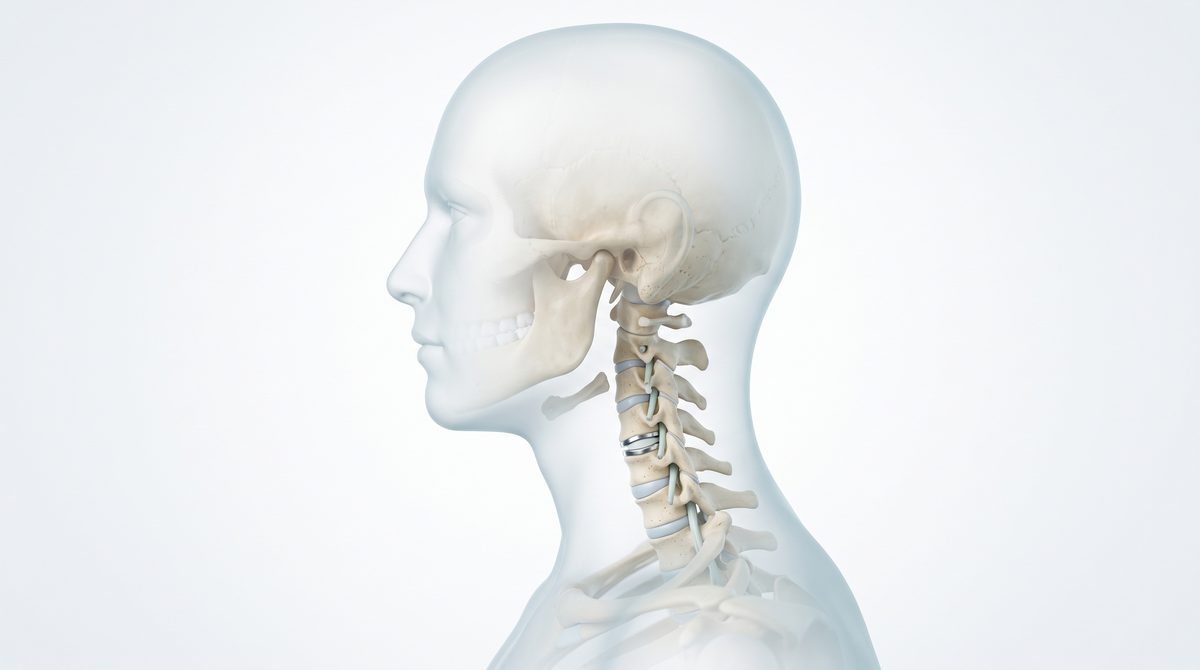
The neck has seven vertebrae with a cushioning disc between most of them. With age, or after a herniation, a disc can push back toward a nerve root or the spinal cord. Pressure on a nerve root can cause pain, numbness or weakness running down one arm, called cervical radiculopathy. Pressure on the cord can cause clumsy hands, trouble with balance and changes in walking, called myelopathy. You can read more on our cervical disc herniation page.
Many people with arm pain get better with time, therapy and sometimes an injection. Surgery is usually discussed when arm pain stays severe, when weakness develops, or when the spinal cord is being compressed.
What the two operations have in common
Both operations are done through a small incision on the front of the neck, often placed in a natural skin crease. The surgeon gently moves the windpipe and swallowing tube aside to reach the front of the spine. The damaged disc is removed, along with any bone spurs or disc fragments pressing on the nerves or cord. This step, the decompression, is what relieves the pressure.
What happens next is where the two part ways.
ACDF: anterior cervical discectomy and fusion
In an ACDF, the empty disc space is filled with a spacer, often made of bone, plastic or metal and packed with bone graft. A small plate and screws usually hold it in place. Over the next several months, the two vertebrae grow together into one solid piece of bone.
ACDF has been done for decades and has a long track record. It works for a wide range of problems, including cases with instability, arthritis in the small joints at the back of the neck, or several levels of disease.
The trade-off is that the fused level no longer moves. For one level, most people notice little change in their range of motion. Over the years, though, the discs next to a fusion may carry more load. Some people later develop wear at a neighboring level, called adjacent segment disease, which may need more treatment. Doctors still debate how much of that is caused by the fusion and how much is simply the natural aging of the neck.
Cervical disc replacement
In a cervical disc replacement, also called cervical arthroplasty, the surgeon places an artificial disc in the space instead of a fusion spacer. The implant is made of metal and medical-grade plastic, or similar materials, and is designed to let that level bend and turn much like a healthy disc. No bone needs to heal across the level.
The goal is to relieve pressure on the nerve or cord while keeping motion. In theory, keeping that level moving may reduce extra stress on the discs above and below it.
Who may be a candidate for each
Disc replacement is not right for everyone. It tends to suit people who:
- Have arm symptoms or cord compression from one or two discs
- Have pressure coming mainly from the disc itself, not from the joints at the back of the neck
- Still have reasonable disc height and motion at that level
- Do not have significant instability, severe arthritis in the facet joints, marked osteoporosis or a prior infection at that level
ACDF may be the better choice when there is instability, advanced joint arthritis, a deformity of the neck, weak bone, or disease at several levels. In some cases a surgeon may suggest a hybrid, with a fusion at one level and a disc replacement at another.
The right choice depends on your anatomy, your symptoms and your images. A surgeon should be able to explain why one option fits you better than the other.
What the research shows
Studies comparing the two have followed patients for ten years or longer. A 2024 review in the journal Spine pooled ten-year results from six studies. People who had disc replacement had fewer second surgeries and fewer adverse events than those who had ACDF. Pain and disability scores were slightly better after disc replacement, but the differences were small enough that most patients would not feel them. Relief of nerve symptoms was similar between the two.
In short, both operations tend to work well for the right patient. For carefully selected people, a disc replacement may lower the chance of another operation later in life.
Recovery for each operation
Many people go home the same day or the next morning after either surgery. A sore throat and some trouble swallowing are common for a week or two. Arm pain often improves quickly, while numbness and weakness can take weeks to months to recover.
After ACDF, some surgeons use a soft collar for a short time and limit heavy lifting while the bone heals. After disc replacement, there is no fusion to wait on, so some people return to normal activity a little sooner. Your surgeon will give you a plan for driving, work and exercise. Our recovery guide covers the first weeks in more detail.
Risks to understand
Both operations share the risks of front-of-neck surgery: temporary trouble swallowing, hoarseness, bleeding, infection and, rarely, injury to the nerves or spinal cord. ACDF carries a small risk that the bones do not fully fuse. Disc replacement carries its own risks, including extra bone forming around the implant that can limit motion, and implant wear or shifting over time. Your surgeon should go through these with you in person.
When to call us
Reach out if arm pain or numbness has lasted more than six weeks, if your grip or arm strength is getting weaker, or if you have trouble with buttons, handwriting or balance. Dr. Higginbotham performs both cervical disc replacement and fusion and can review your images to explain which one, if either, makes sense for you.
Common questions
Is cervical disc replacement better than fusion?
Neither is better for everyone. For people who fit the criteria, disc replacement may preserve motion and lower the chance of a later operation. For people with instability, joint arthritis or several levels of disease, fusion is often the more reliable choice.
Will I lose neck motion after a one-level fusion?
You may lose a little motion at that one level, but most people do not notice much change in daily life, because the other levels of the neck still move.
How long does an artificial disc last?
Current implants have been followed for ten years and more with good durability in studies. As with any implant, wear or later problems are possible, and long-term follow-up continues.
Can I have a disc replacement at two levels?
Some artificial discs are approved for two adjacent levels. Whether it fits you depends on your anatomy and images.
Sources
- Cervical Radiculopathy (Pinched Nerve), AAOS OrthoInfo
- Quinto ES Jr, et al. Ten-year outcomes of cervical disc arthroplasty versus anterior cervical discectomy and fusion: a systematic review with meta-analysis. Spine. 2024.
- Spinal fusion, MedlinePlus Medical Encyclopedia (NIH)
- Cervical MRI scan, MedlinePlus Medical Encyclopedia (NIH)